Which bouquet suits you depends on what you have in hand: a mixed bunch of loose stems suits the Colorful Wildflower Bouquet, one pricey flower like peony calls for the tight White Peony Bouquet, and a few late-summer blooms from the garden lean toward the Sunflower Garden Bouquet or the Peach Cosmos Bouquet.
The ideas here run from a Mason Jars Flower Bouquet that spreads a few stems across several jars to a Calla Lily Pearl Bouquet with no filler at all.
Whatever the budget, the shapes that look best are the ones with a plan behind them, such as a tall snapdragon at the back with shorter roses and chrysanthemums stepping down around it.
1. Arrange Flowers
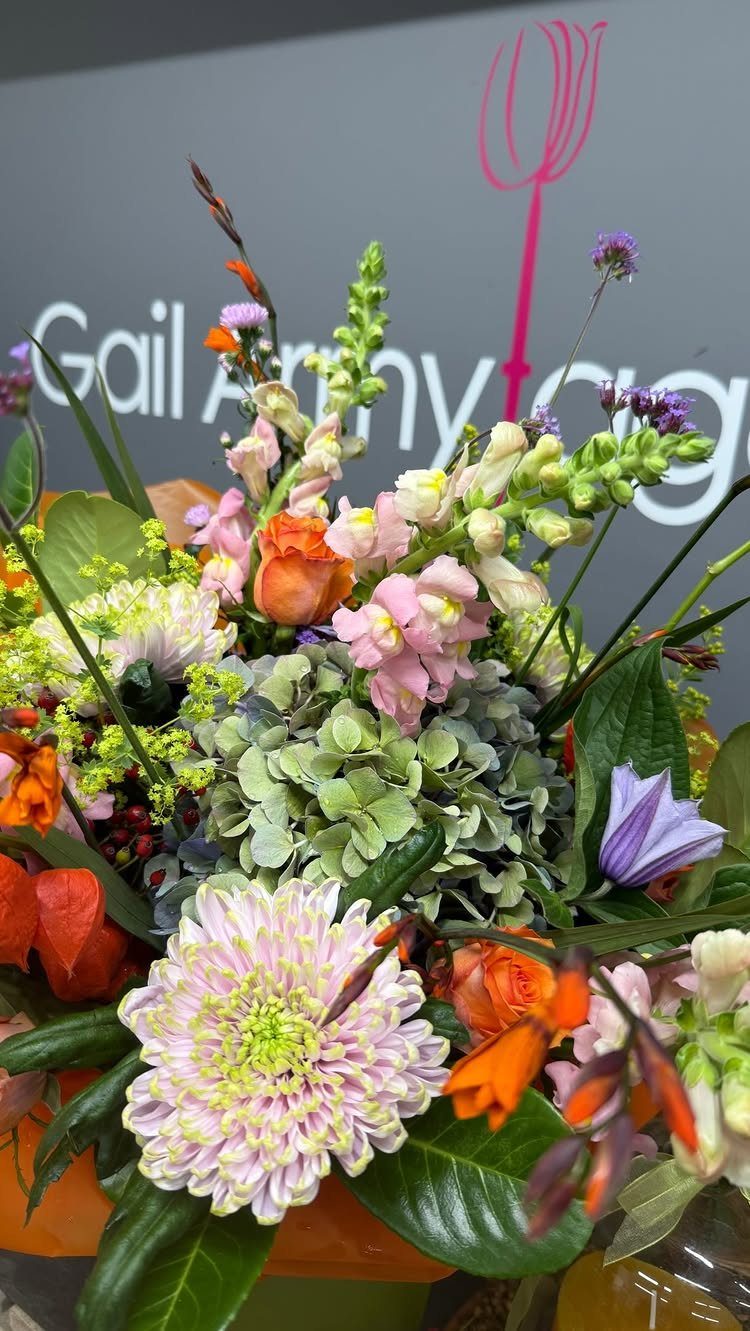
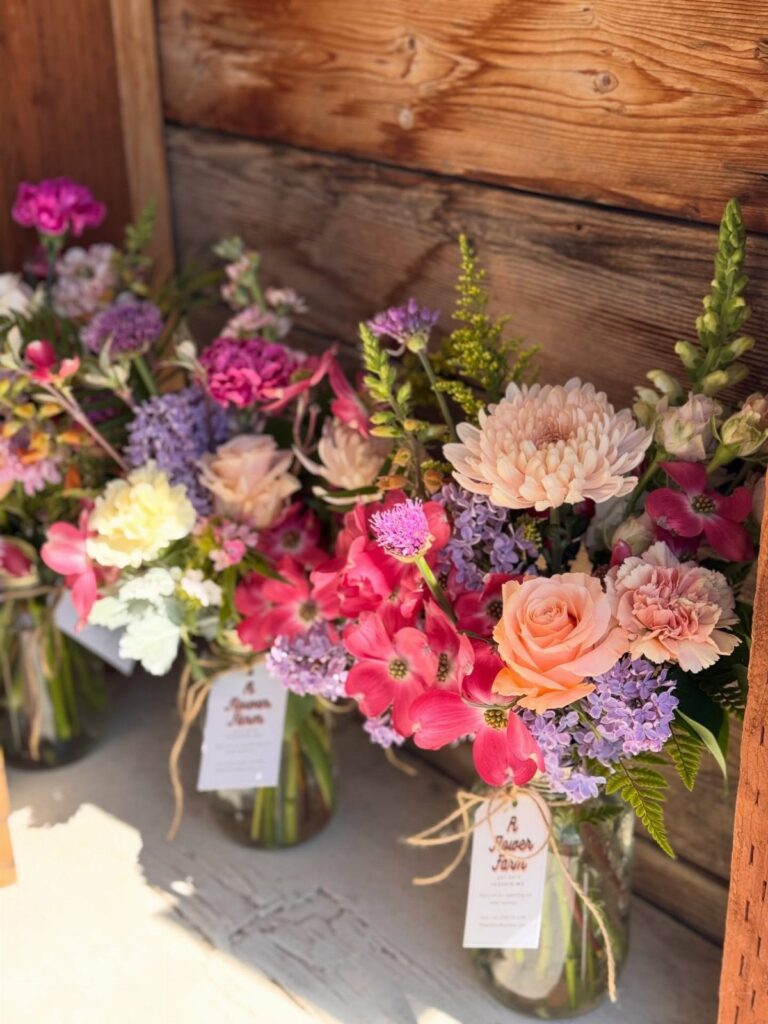
Chrysanthemums, roses and snapdragons make a good trio because each has a different shape: round, layered and tall.
Set tall stems like snapdragons at the back or center of the bouquet, then work shorter flowers such as roses and chrysanthemums around them so the height steps down toward the edges.
For a budget bouquet, grocery store stems work fine. Stick to 2 or 3 related colors, say pink, orange and purple, and add plenty of green leaves between them; the mix then looks planned instead of random.
Florist-arranged bouquets are beautiful, but not always in everyone’s price range. Save money by buying cut flowers at the grocery store (or cutting flowers from your own garden ) and make simple DIY bouquets on your own.
2. Wrap Bouquet
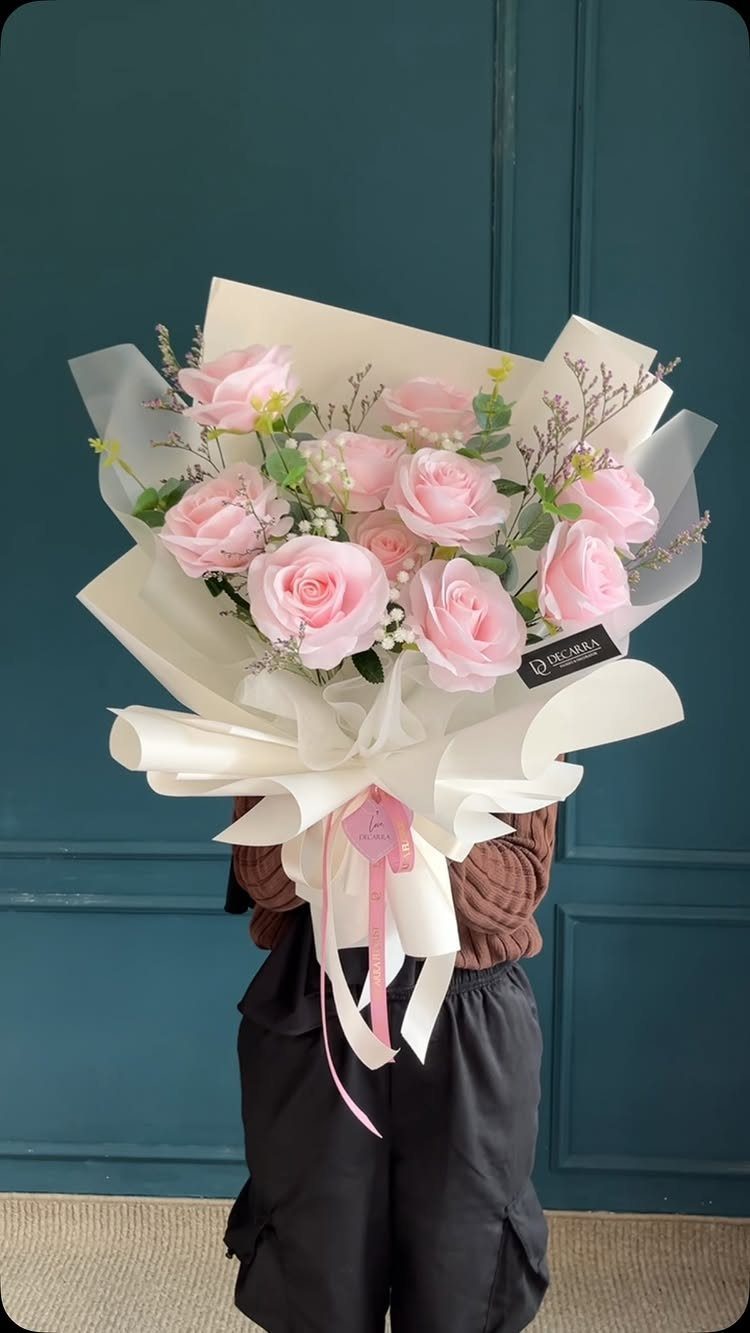
White paper and a pink ribbon turn a plain bunch of roses into something you can hand over at the door.
Lay the paper flat, set the stems diagonally across it, then fold the sides up and in around the blooms.
Tie the ribbon where your hand held the stems. Matching the ribbon to the rose color keeps it quiet, and a white wrap lets the flowers do the talking.
3. Mason Jars Flower Bouquet
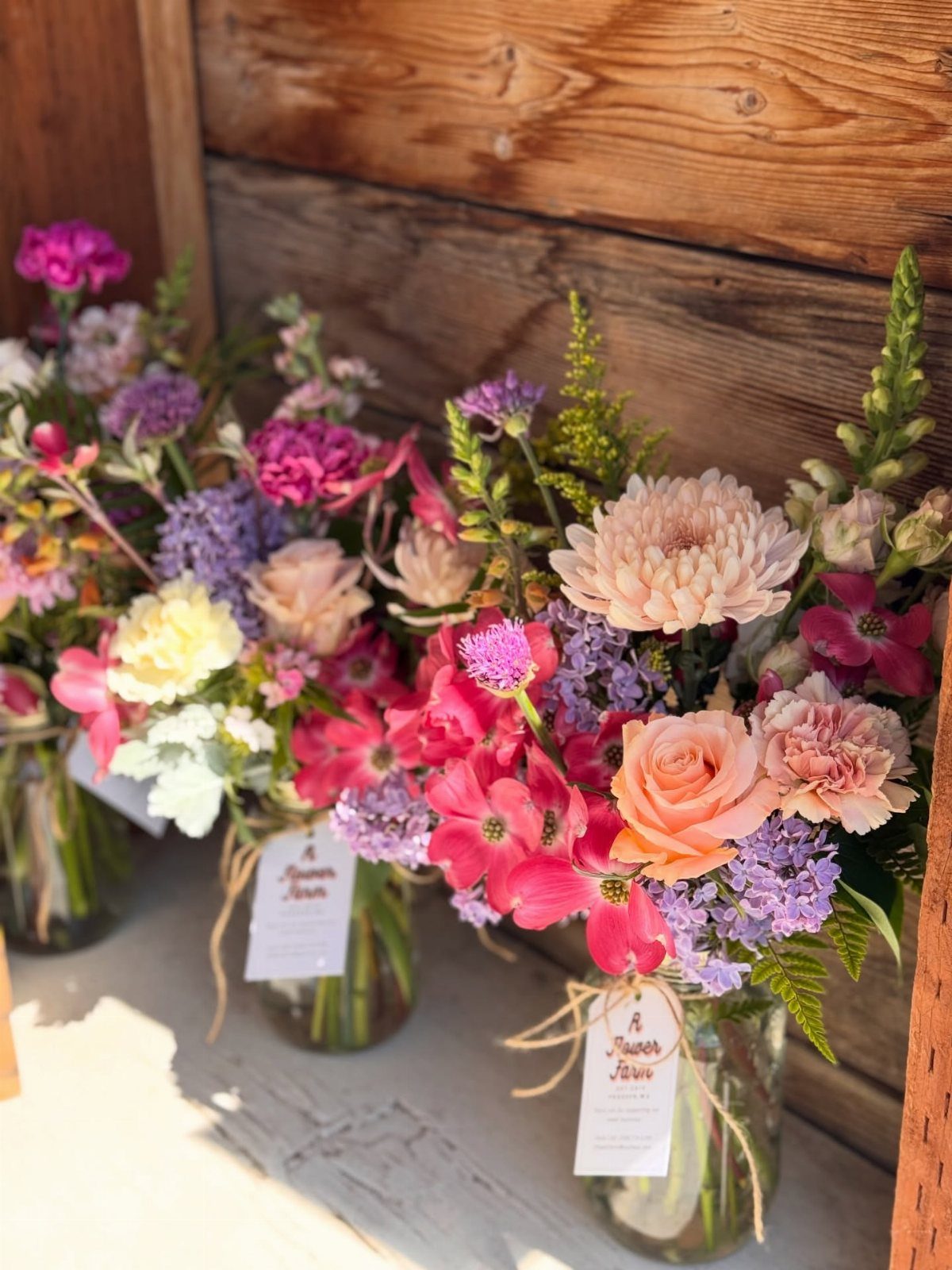
Mason jars give you the vase, the container and the gift in one piece. Fill each jar with a loose mix of colors, and tie twine around the neck for a finish that suits a wooden table or porch.
I like making three at once.
One jar looks small, but a group of three looks generous, and you can split a single supermarket bunch across them. Trim stems so the blooms sit just above the rim.
4. Colorful Wildflower Bouquet
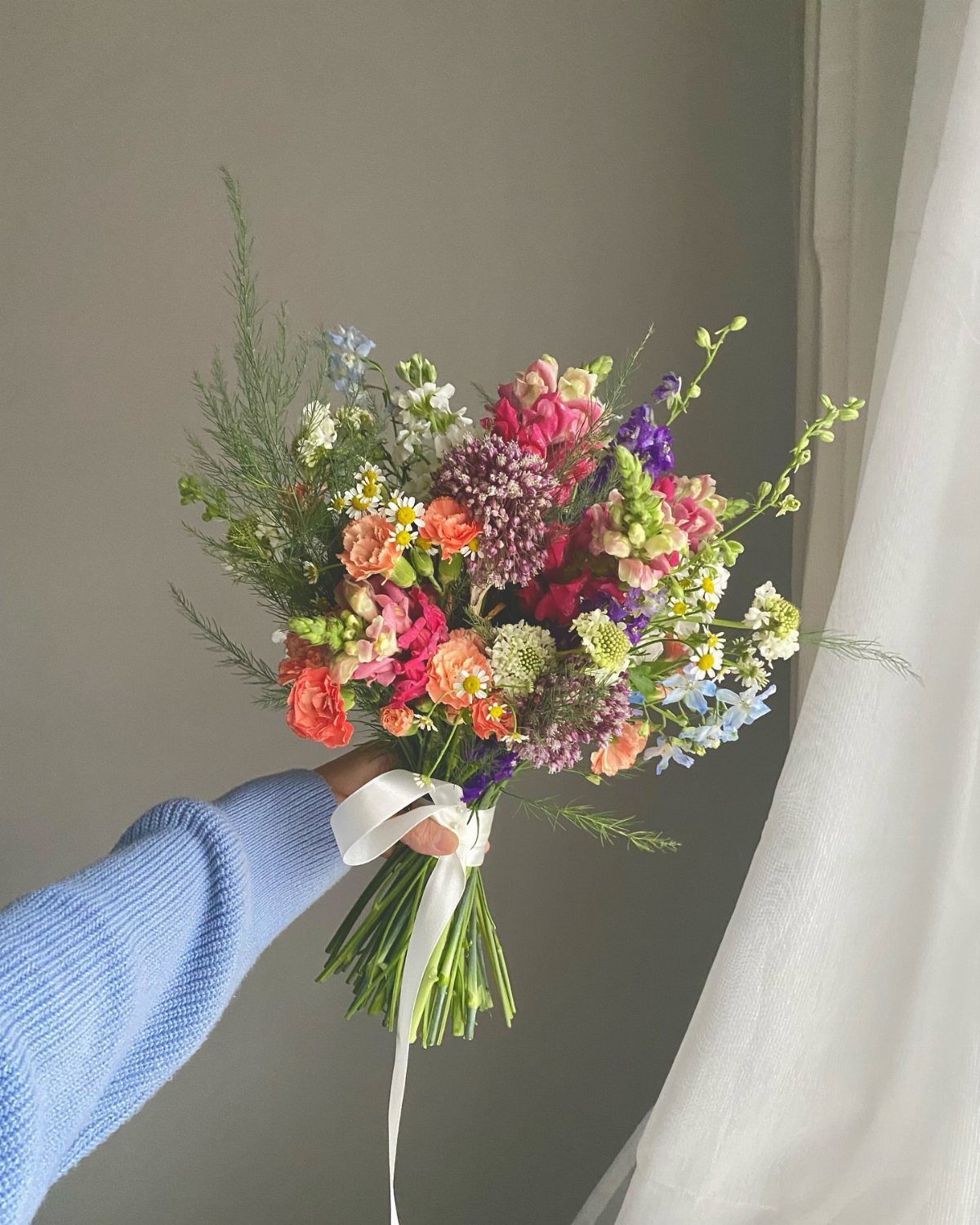
Wildflowers forgive beginners, since a loose, uneven shape is exactly what you want. Gather the stems in one hand, add them in a slight spiral, and keep greenery mixed throughout rather than only at the edges.
Tie it with a white ribbon at the point where the stems cross. The pale ribbon keeps the focus on the colors, and a hand-tied bunch needs no foam, tape or special tools.
5. White Peony Bouquet
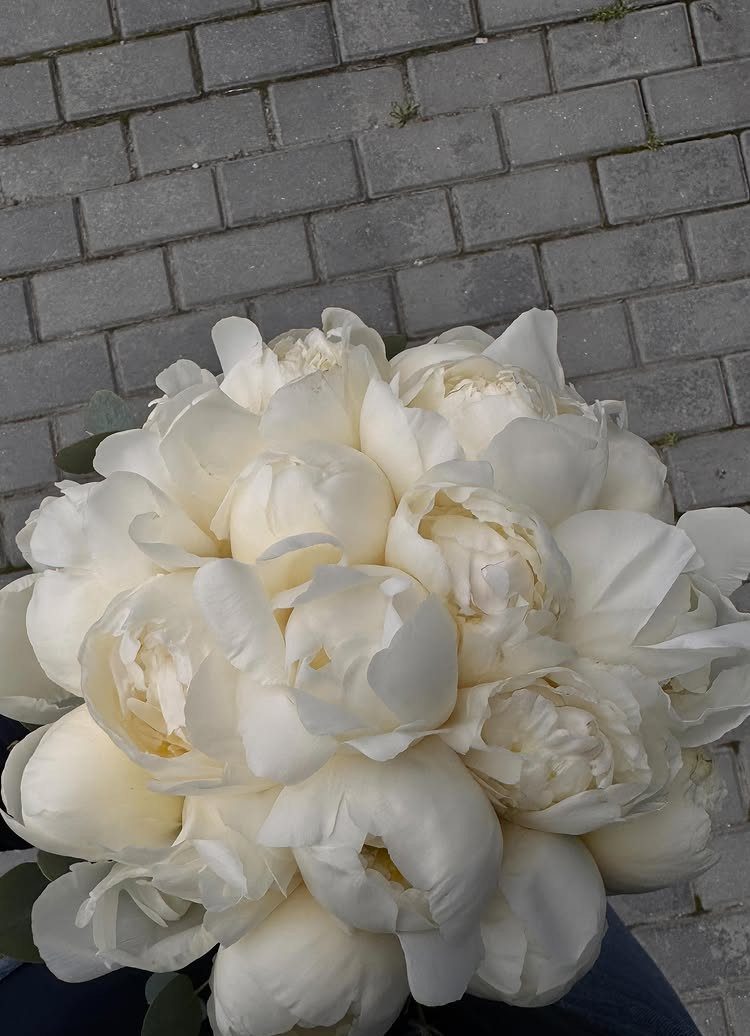
An all-white peony bouquet depends on fullness, not variety. Use one flower type and pack the blooms close, so the heads press together into a dense dome.
Because there is nothing else to look at, choose stems at the same stage of opening.
Mixed bud and bloom sizes look messy in a single-color bunch. Expect peonies to cost more than most stems, so a smaller, tighter bunch is a smart way to save.
6. Peach Cosmos Bouquet
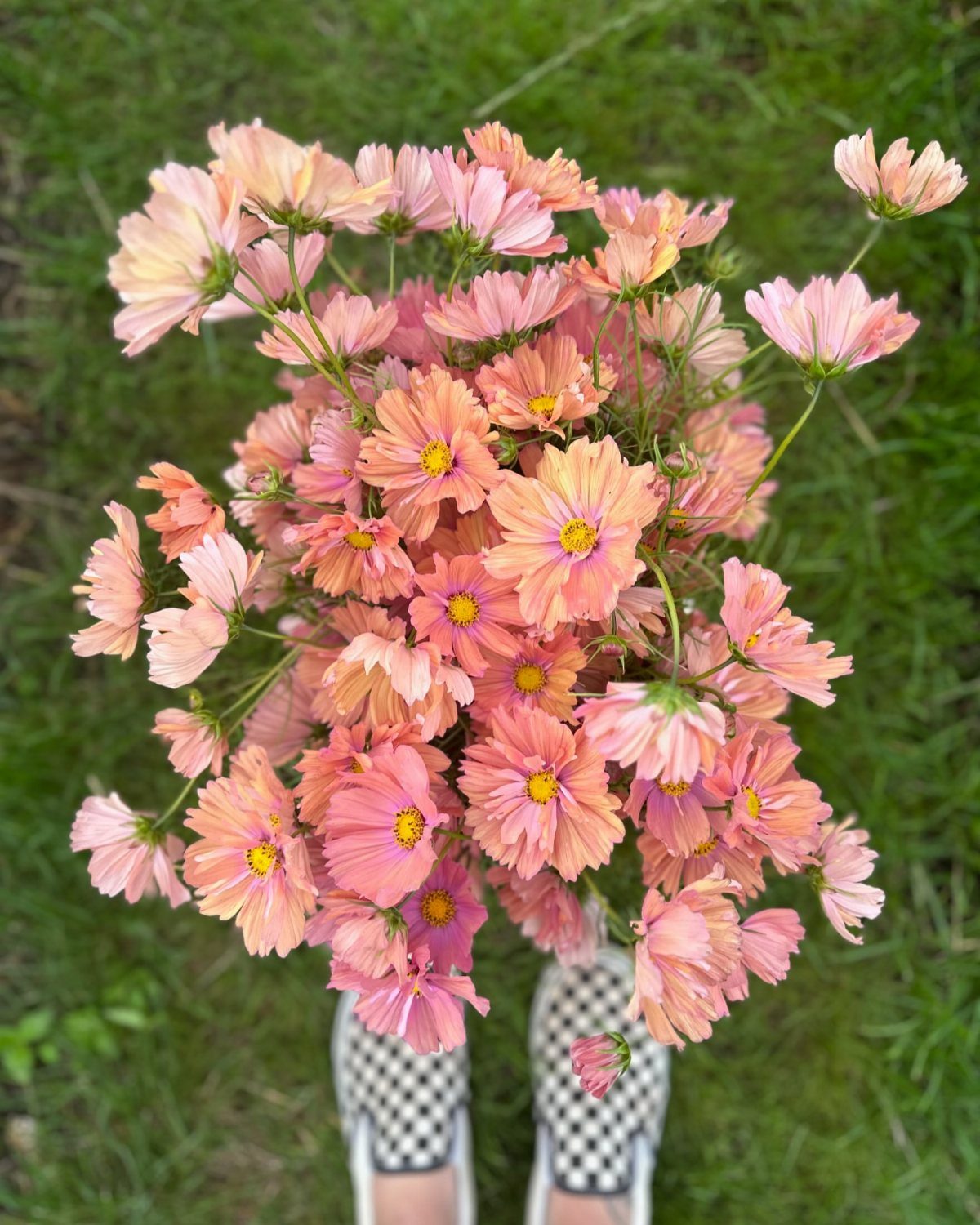
Cosmos has thin stems and feathery foliage, which gives a bouquet that airy, floating look. Peach and pink sit close enough on the color wheel that you can pack in many stems without anything clashing.
Hold the bunch loosely and let the blossoms sit at slightly different heights. Squeezing them into a tight dome cancels the lightness, so tie the bunch gently and leave the shape open.
7. Mini Rose Vase Arrangement
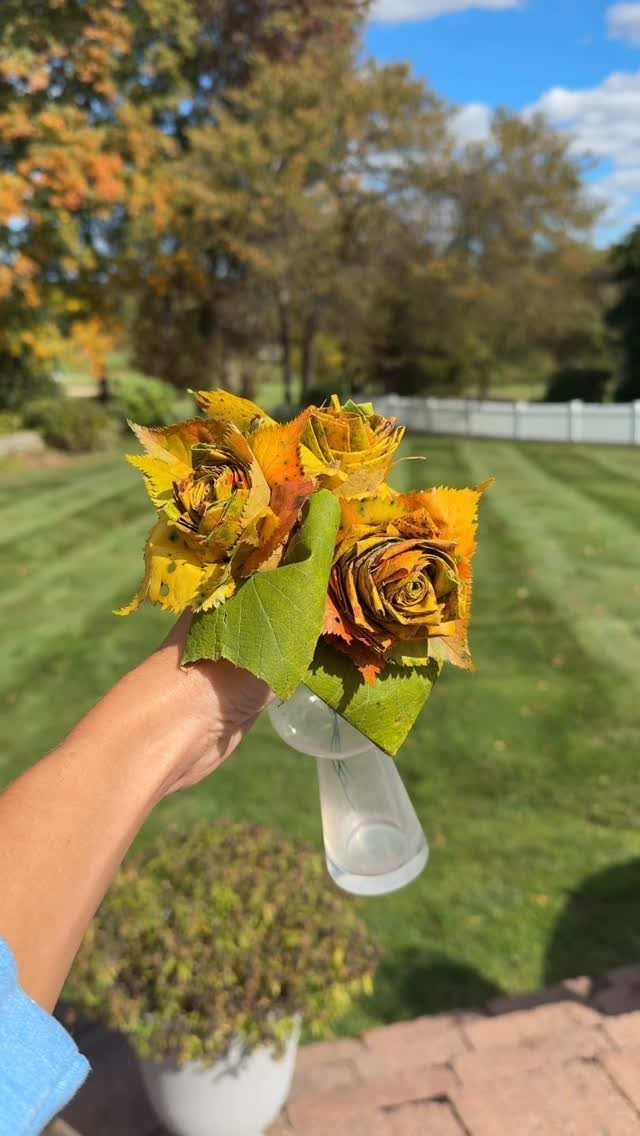
A few roses in a small glass vase need no wrapping and almost no skill, and they still read as a finished present.
Yellow and orange sit side by side on the color wheel, so any mix of the 2 looks planned.
A small vase holds only a handful, which also keeps the cost low for a budget-minded giver. Clear glass lets the stems show, so trim off any leaves that would sit underwater.
8. Calla Lily Pearl Bouquet
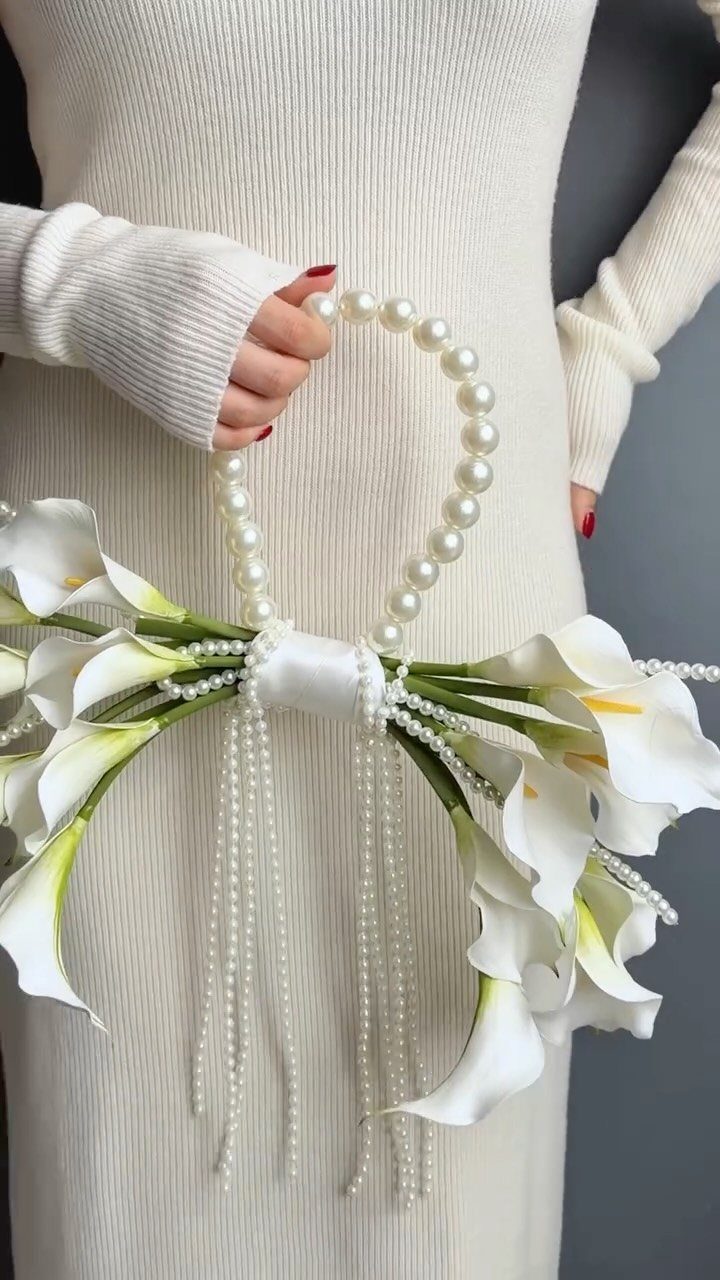
Calla lilies need very little help, and that is why a pearl handle suits them. Each bloom is a single clean funnel, so a short bouquet of one flower type in white reads as formal without any filler.
Wrap the stems in pearl-beaded trim to make the handle, then let a few loose strands trail below.
I would keep the count small and the stems even, since a minimalist bunch shows every uneven cut. Craft-store pearl strands are the shortcut here.
9. Classic Red Rose Bouquet
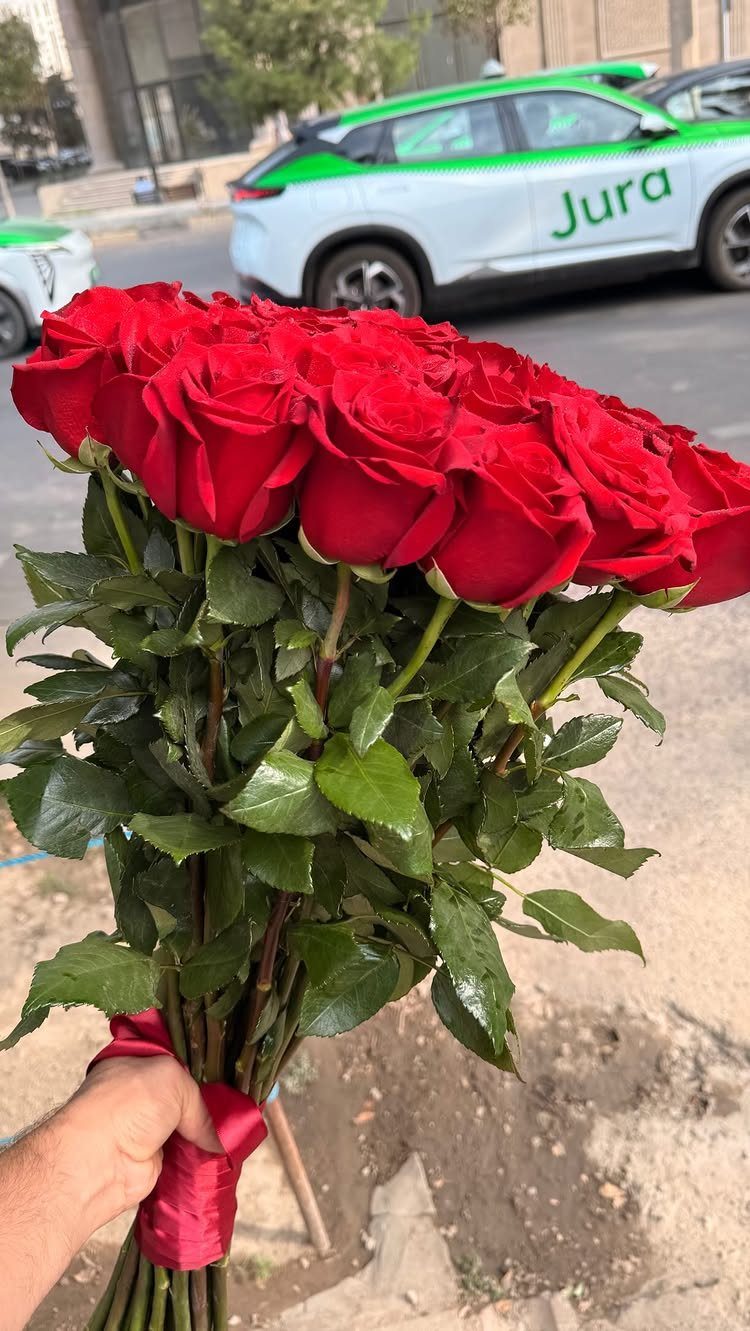
Red roses with a red satin ribbon is the one combination I would never talk anyone out of. Tone on tone keeps the bunch looking deliberate, and the ribbon works as part of the flowers rather than a separate decoration.
Add some greenery among the roses so the red has something to push against. A large bunch costs more than most, so a smaller, tidy one beats a stretched-thin big one.
10. Sunflower Garden Bouquet
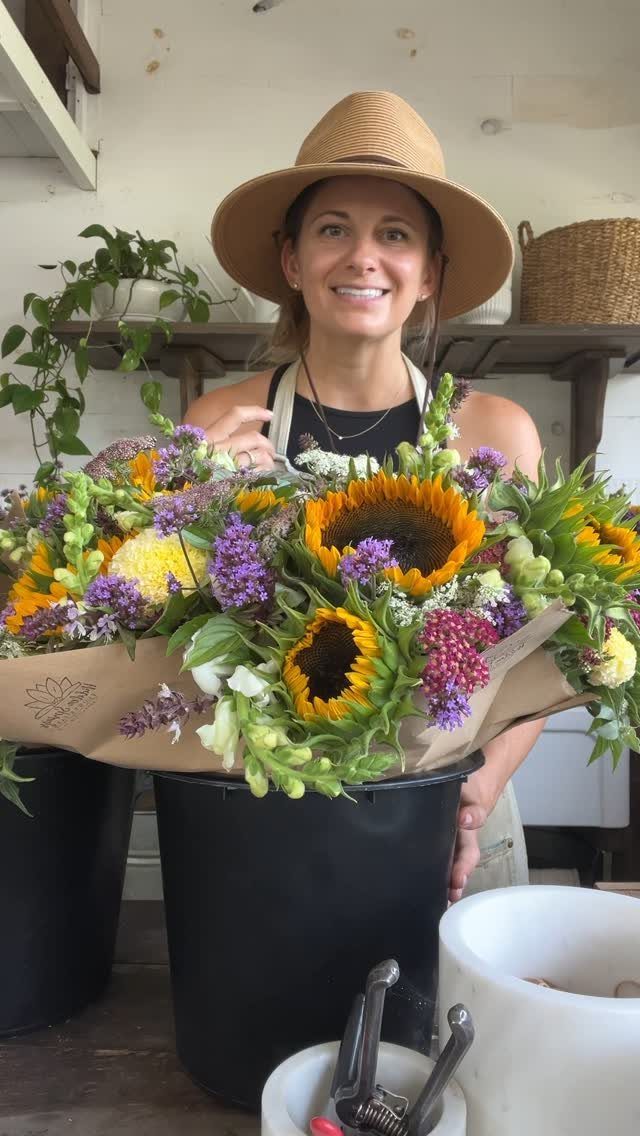
Sunflowers carry the whole bouquet, so the other flowers should stay in the background. Purple accents make a good partner because purple and yellow sit opposite each other on the color wheel, and each makes the other look brighter.
Start with a few big sunflower heads, then tuck the purple blooms and some leaves between them wherever the bouquet looks thin.
A bucket works as both the workspace and the display, which suits a casual, garden-style look. Heavy heads need a firm grip, so tie the bunch tightly at the stems.
Tips for Flower Selection
A balanced bouquet needs three kinds of flower: a focal bloom, one or two secondary flowers, and filler.
Build in layers: one focal bloom to set the center, then the secondary flowers and filler around it, with greenery going in last.
Turn the bouquet a little after each round and spread the focal blooms throughout. The bunch should look about the same from every side, so you may need to add secondary flowers, filler or greenery more often than you expect.
If hydrangea is in the mix, hold it until the very last. Placed around the outside, the stems anchor the other flowers and make the bunch look full without looking choppy.
Hold off on trimming until the vase is sitting right beside you, because a stem cut too short can’t be added back.
A tall, heavy-bottomed vase is the right call for big-headed flowers like dahlias or peonies, since a light one will tip under all that weight.
Small blooms on shorter stems look better in a low vase or a bud vase, where they aren’t swallowed by the container.
Best Flowers for Bouquets
If you grow your own, I’d start with annual wildflowers: they’re forgiving and cheap to seed. Expect blooms about 6–8 weeks after the seeds sprout, then roughly 2–3 months of flowers through summer.
My short list for cutting is sunflowers, zinnias, cosmos, bachelor buttons (also called cornflowers), baby’s breath, daisies and sweet peas.
Skip Queen Anne’s lace and poppies in a cut bouquet.
Queen Anne’s lace wilts fast once it moves from garden to vase, and cut poppies barely last a day or two, so I’d save both for a bouquet you’ll enjoy right away.
If you love poppies, their seed pods make a nice accent.
Keep the trim simple, since the recipient will likely remove it when the flowers go into a vase.
Bouquet Types
A nosegay is a small bouquet you hold in one hand, traditionally packed with tiny, fragrant blooms. Any blooms work, but avoid extra-long stems, which belong in a vase.
Remove packaging and rubber bands, but save the bands. Pull every leaf off the stems up to the flower heads, and snip the thorns off roses so they don’t snag your hands or the other stems.
Arrange the flowers in one hand until the bunch fits comfortably. Nothing about this style is formal, so arrange it to suit your own eye.
Floral tape will hold the stems, but a rubber band or twine works fine, so skip it if you don’t have any. Wrap any embellishment firmly without snapping the stems.
Most will end up 6–8 inches tall.
Mini mason jar bouquets scale well: 10 cover 10 round tables, 5 rectangular tables, 10 shower door prizes or 10 teacher thank-yous.
Frequently Asked Questions
How to make a simple flower bouquet?
Before arranging anything, pull the lower leaves off each stem, trim thorns from roses, and build the bunch in one hand, laying in each new stem at a slight angle.
Tie the bunch where your hand holds it with a rubber band or twine, then add a ribbon or wrap. Floral tape works too, but it isn’t required, and trimming the stems last keeps you from cutting one too short.
What is the 3:5:8 rule in bouquets?
I can’t back up a specific 3:5:8 ratio, so I won’t guess at it. My own method is simpler: start with one big focal flower, add a couple of supporting blooms, tuck in filler, and finish with greenery around the edge.
Turn the bunch a little after each round so it looks about the same from every side.
Is it cheaper to build your own bouquet?
Usually, yes. Grocery store stems work fine, and a handful of simple extras from a craft drawer or dollar store makes them look finished.
A small jar or vase holds only a few stems, and one supermarket bunch can be split across 3 mason jars. Pricier flowers like peonies and roses are best bought in a smaller, tighter bunch.